




Grinding Media (95% Zirconium Beads)
Have excellent toughness, strength, impact resistance, not broken.
Widely used as grinding media in wet grinding and dispersion processes for liquid, slurry, paste-like, and powder-liquid formulations that require fine particle reduction, stable dispersion, and low contamination.
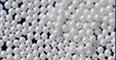
95% zirconia beads are high-density ceramic grinding media used in wet grinding and dispersion processes. During milling, the beads are driven through the material inside the grinding chamber. As they collide with the particles and rub against each other, they help break down agglomerates, reduce particle size, and make the dispersion more uniform. Their high zirconia content gives these beads good hardness, wear resistance, and chemical stability, so they can be used in fine grinding processes that require low contamination, stable performance, and long service life. Different bead sizes can be selected according to the required fineness, material viscosity, and bead mill configuration.
Technical Specifications
| Chemical Composition | Content | Physical Property | Parameter |
| ZrO₂ (Hf02) | 94-96% | Density | 6.0–6.1 g/cm³ |
| Bulk Density | 3.7 g/cm³, for 1.8–2.0 mm beads | ||
| Compressive Strength | > 2.0 kN, for 2 mm beads | ||
| Vickers Hardness | > 1250 HV | ||
| Self-Wear Rate | < 2 ppm | ||
| Fracture Toughness | 8.0 MPa·m¹/² |
Machine Details

These zirconia beads, also known as yttria-stabilized zirconia beads, are made from fine zirconia and yttrium oxide raw materials through high-temperature sintering. The zirconia content is around 95%, while yttrium oxide works as a stabilizer to improve toughness and grinding stability. The finished beads have a smooth surface, good roundness, and a pearl-like appearance.

Zirconia beads have good spherical roundness, with a roundness rate above 96%. A smoother, more regular bead shape helps the media move evenly during grinding and reduces unnecessary wear.

Available bead sizes range from 0.05 mm to 50 mm, covering different process needs from nanoscale ultrafine grinding to coarser grinding applications.

Good corrosion resistance helps the beads remain stable when used with many chemical liquids, including acidic and alkaline media, reducing the risk of reaction with the processed material during grinding.
Features


Why Polyc
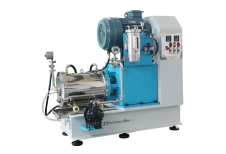
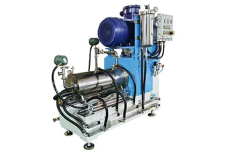
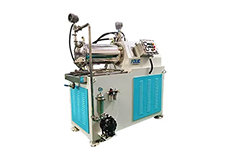
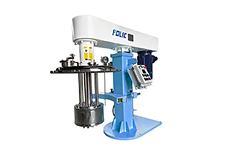
Polyc manufactures bead mills and related wet grinding equipment for paints, coatings, inks, pigments, pesticides and other chemical materials. Standard bead mill and basket mill models are available for different processing capacities and grinding requirements.
Our core technical team has more than 30 years of industry experience. In addition to standalone grinding equipment, Polyc can integrate material handling, dispersion, grinding, mixing, filtration and filling equipment into complete production lines.