

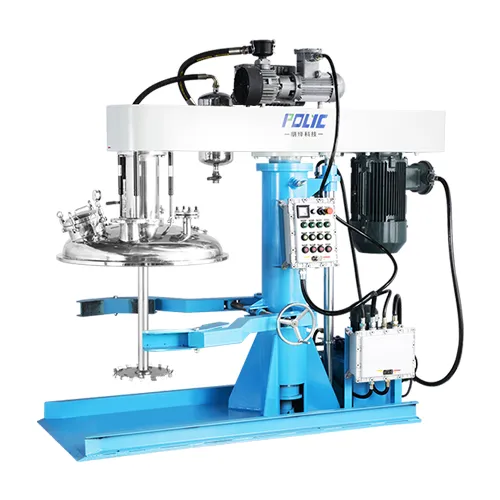

Vacuum Disperser
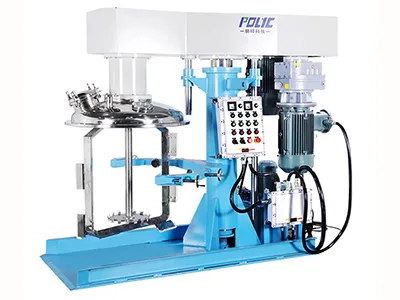
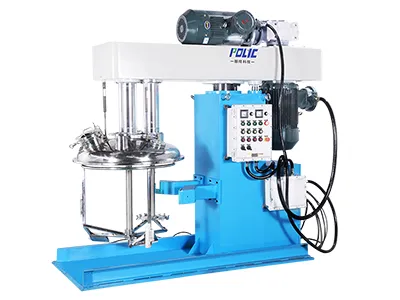
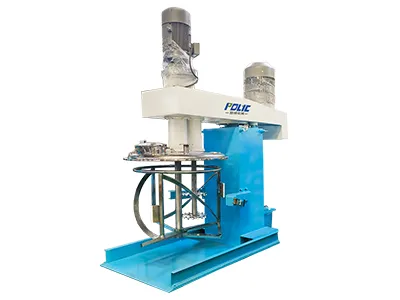
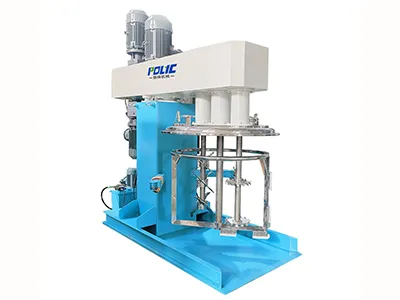
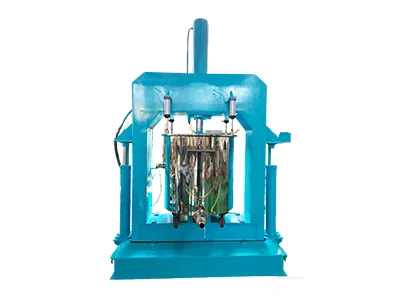
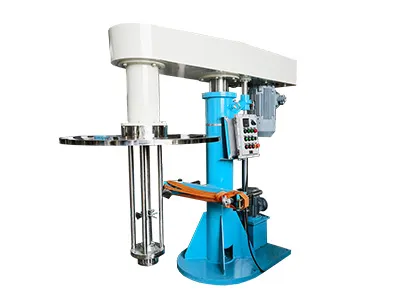
Nongrade speed adjustment by frequency inverters, hydraulic elevating, working steadily, use and maintenance expediently.
Vacuum dispersers are suitable for wet dispersion of low-viscosity liquids, slurries, pastes, and powder-liquid formulations that require air removal, reduced foaming, and better protection from oxidation or contamination during processing.
Vacuum dispersers are used when a material needs high speed dispersion with better air removal and process control. The dispersing disc works inside a sealed tank, while the vacuum system reduces air trapped in the material during mixing and dispersion. A closed negative-pressure environment also helps limit the loss of volatile components and reduces contact with air, which is useful for formulations that are sensitive to bubbles, oxidation, or contamination, while supporting a smoother texture, cleaner dispersion, and more stable final quality.
Technical Specifications
| Model | Motor Power | Rotation Speed | Tank Capacity | Lifting Stroke | Vacuum Pressure | Disc Diameter |
| kW | rpm | L | mm | Mpa | mm | |
| 4 | 0-1450 | 100 | 800 | ≤-0.08 | 200 | |
| 5.5/7.5 | 0-1450 | 200 | 900 | ≤-0.08 | 250 | |
| 11/15 | 0-1450 | 400 | 900 | ≤-0.08 | 250/300 | |
| 18.5/22 | 0-1450 | 600-1000 | 1200 | ≤-0.08 | 350 | |
| 30 | 0-1450 | 1000-1200 | 1200 | ≤-0.08 | 400 |
Technical Drawings
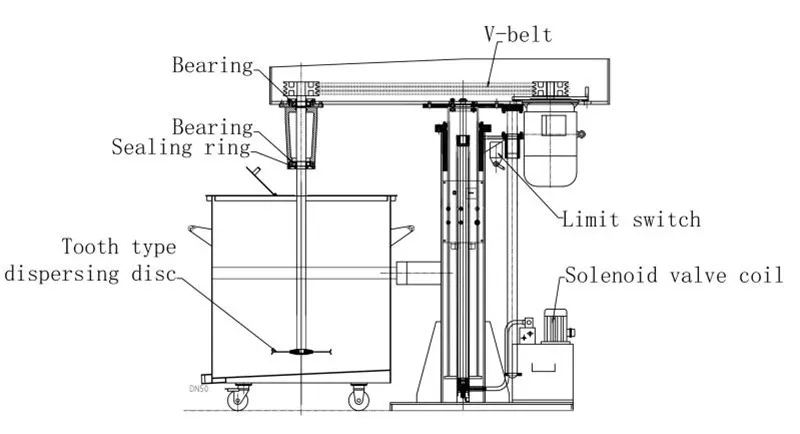
We can prepare technical drawings based on the required equipment configuration and project needs, with initial drawings available within 3 days. After order confirmation, we can also provide detailed assembly and disassembly diagrams, factory layout drawings, production line flowcharts, and other supporting documents for the corresponding equipment when needed.
Machine Details
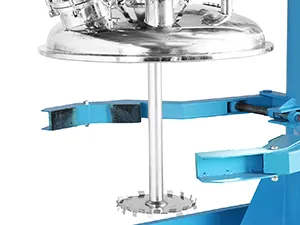
Vacuum Dispersers
Vacuum dispersers can be configured with inverter-duty TEFC motors or explosion-proof motors, with power options up to 500 HP depending on the project. Other available configurations include durable V-belt drives, SKF or NSK bearings, hydraulic lifting systems for smoother up-and-down movement, laser-cut dispersing blades, and stainless steel wetted parts for reliable long-term operation.
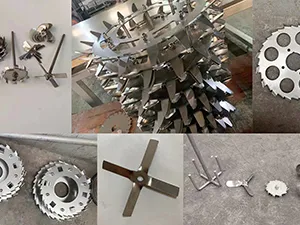
Dispersing Disc Designs for Different Materials
Dispersing discs can be made from wear-resistant stainless steel and shaped into serrated or other structures according to the disperser power, material viscosity, and process requirements. The disc angle and tooth design help create the shear needed for mixing and dispersion, while the sturdy structure makes replacement and cleaning more convenient.
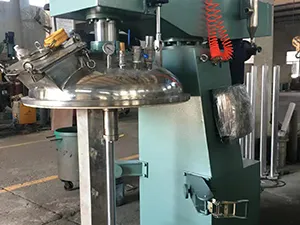
Customized Scrapers for Viscous Materials
Scrapers can be customized according to the production process and material viscosity. For higher-viscosity products, a scraper helps remove material from the tank wall during mixing, improving material movement and making tank cleaning easier after production.
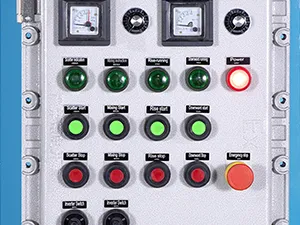
Sealing and Explosion-Proof Protection
Sealing and protective configurations can be added for processes involving solvents, high-purity materials, or higher safety requirements. A higher protection level helps reduce leakage risk, limit material exposure, and meet explosion-proof requirements for safer production.
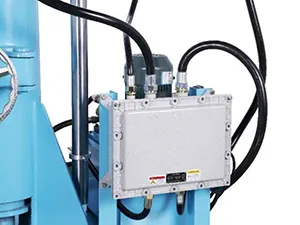
Organized Wiring and Junction Box Setup
Before delivery, the wires needed for operation are coded and arranged inside the junction box on the disperser. Customers can follow the supplied circuit diagram to complete the on-site connection more easily, helping reduce installation time and labor.
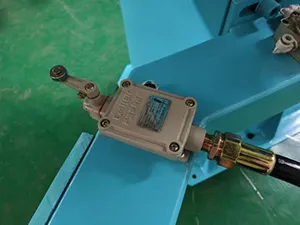
Safety Limit Switch
The safety limit switch helps prevent the disperser from operating while the lifting system is moving or when the material tank is not in the correct position, reducing the risk of operator injury. Explosion-proof limit switches can also be provided for equipment used in hazardous areas, according to the required safety standards.
Features
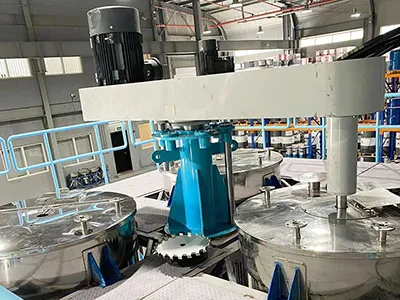
Why Polyc
Polyc manufactures mixing and dispersion equipment for paints, coatings, inks, adhesives, sealants and other chemical formulations. Equipment configurations can be selected according to material properties, processing capacity and mixing requirements.
Our engineering team supports equipment selection and configuration, including motor power, explosion-proof options and voltage requirements for different markets. Mixing and dispersion equipment can also be integrated with other process machinery into production systems.